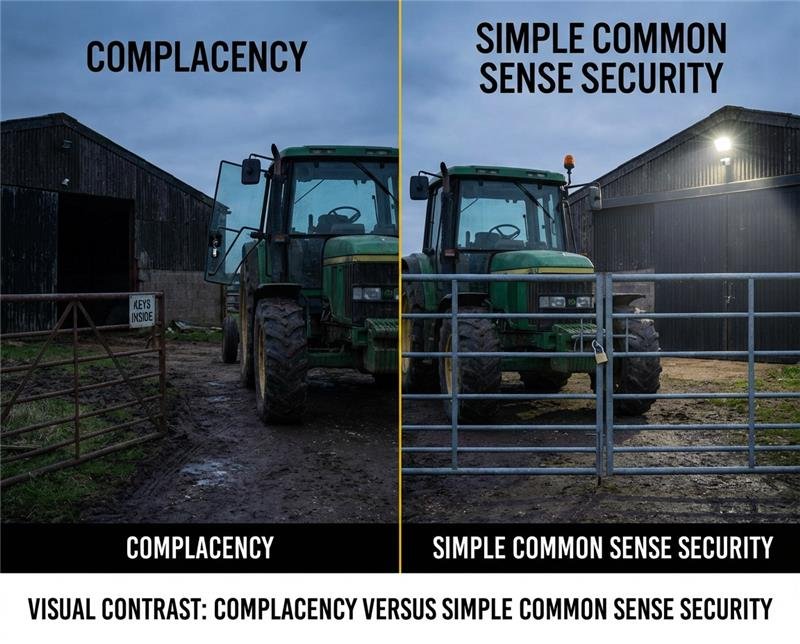
“Complacency” is an eleven letter word that scores 24 points in Scrabble. It could also be your worst enemy in the fight against rural crime.
Why? Because a complacent person believes that simple crime reduction measures are for other people and “equipment theft” is something they read about in Farmers Weekly between November and March when the dark nights are long and there may be fewer people around on the farm.
But a series of simple, common-sense actions and behaviours can reduce the opportunity for a thief to succeed.
The sad fact is that it’s sometimes a lack of common sense that can increase your likelihood of becoming a victim of rural crime. It’s not uncommon to discover a £50k tractor left unattended overnight in an unsecure yard or barn.
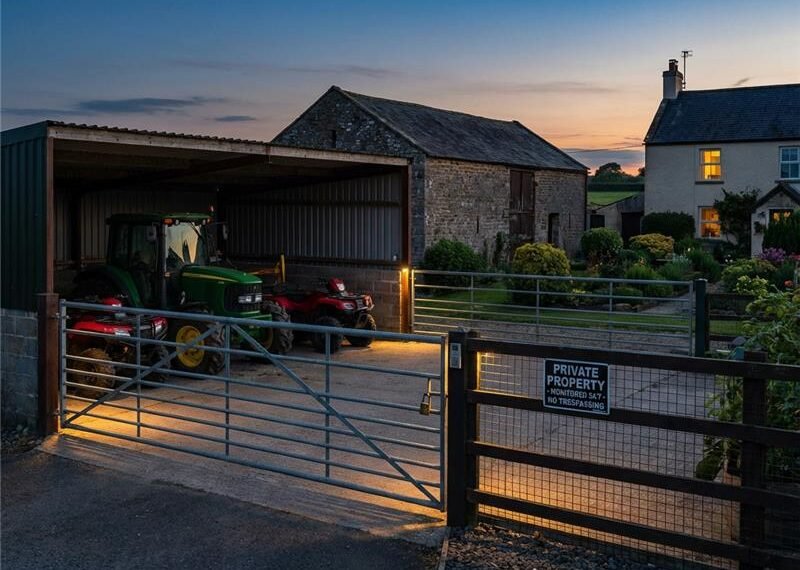
However, removing the vehicle keys from the ignition, activating the engine immobilizer, locking the cab, closing and securing barn doors and closing and locking the yard gates would make the thief’s chances of stealing the tractor that much harder.
Will these simple security measures guarantee absolute protection? No, of course not, but they may deter the opportunist or cautious thief.
Speak to a commercial security adviser and they will most likely encourage you to spend thousands of pounds on strong fencing, robust gates, intruder detection and closed circuit television and – if a comprehensive security assessment concludes that’s proportionate and cost efficient – then they may be right. I would argue, however, that by creating a “security culture” in your own mind and those who work by adopting simple but effective counter-measures, you can deter, detect or delay a criminal long enough to initiate a suitable response.
The security industry often talks of the “Theft Triangle” consisting of three factors: motive, desire and opportunity. When all these factors are present, the likelihood of a theft is at its highest. You can seldom affect the motive or desire of a criminal, but you can reduce the opportunities for a willing and motivated thief. Remove the opportunity and the theft cannot occur. When assessing the probability of successfully removing your property, a thief must believe that the chances of getting caught are small or that the reward of success outweigh the consequences of failure.
Anecdotal evidence indicates that a significant proportion of rural crime – especially the theft of large agricultural machinery – is stolen to order and occurs only after prior reconnaissance or advanced surveillance. This means that the thief will have previously visited your farm or watched how and where you park your vehicles and equipment overnight. The thief will always have the initiative and can choose when to act.
So is it down to luck? No, it’s about doing the simple things habitually. It’s about creating a culture where everyone on the farm accepts the responsibility for protecting vehicles, equipment and tools.
It’s about thinking like a thief and identifying where the vulnerabilities lie. Ask yourself: “If I wanted to steal something from the farm, what would it be? How would I do it? Has the farmer done anything to prevent me from being successful?”
It’s about denying the opportunity for a thief getting to or removing those vehicles or pieces of equipment that you need to run your farm.
Consider what the thief will need to remove your property. If they need a vehicle to tow, lift or carry an item away, then focus on preventing them from getting close enough to the property they want to steal. Strategically set out your yard to create natural or engineered barriers; put heavy items of equipment or large tree trunks to deny a route of approach, dig ditches or create earth banks impassable by trucks or trailers, adapt and position obsolete property to block open areas or simply lock commercially engineered gates with high-quality shielded padlocks.
The more accessible your yard is to the public, the greater the chances of it being targeted. Consider where you park or store your most critical assets and always create a natural boundary between what is public space and your private property. Maximise the use of warning signage and learn how to recognise suspicious behaviour – and who to report it to.
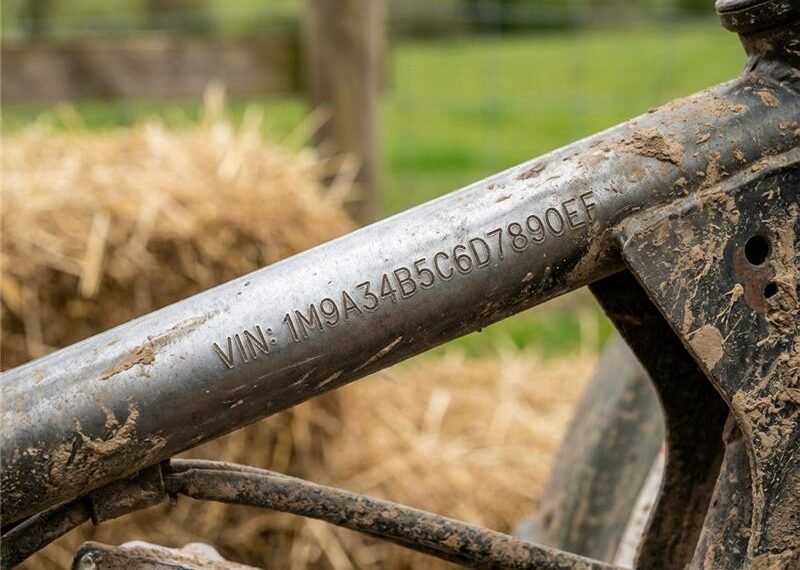
Make your property unique by overtly marking it so it becomes easily recognisable; consider stamping your post code or a farm logo in places where it is obvious. Back this up with covert marking on numerous component parts, in case the stolen vehicle is disassembled for resale. Create an asset register to list all manufacturer’s serial numbers and record digital photographs of your most valuable or critical items of equipment.
Create a plan of what to do if you see something suspicious or you believe your property is subject to a criminal attack. Never place yourself in harm’s way and always collect as much information as possible to aid the police investigation; learn how to use your smartphone camera – it could help you collect critical evidence that leads to the recovery of your property.
In September 2015, the National Rural Crime Network (NRCN) stated that the true cost of rural crime in England and Wales could exceed £800m.
Farmers are busy and have many pressing tasks, but this alarming statistic highlights the need to never let complacency creep in. Word Count: 906
*Frank Cannon is a security specialist with over 30 years’ experience in safeguarding people and property across the globe.
Published in Farmers Weekly, 1st February, 2016