Protecting isolated farms in the UK countryside is crucial due to the escalating threat of rural crime, which encompasses both opportunistic theft and activities by organised crime groups. These crimes not only inflict significant financial losses but also jeopardise the safety and well-being of farming communities.
Why isolated farms are vulnerable
The remote nature of rural farms makes them attractive targets for criminals. Limited surveillance, sparse population, and delayed police response times contribute to their susceptibility. According to the Country Land and Business Association (CLA), there are at least 22 serious organised criminal gangs operating in the UK countryside, engaging in activities such as machinery theft, illegal hare coursing, and waste dumping .BBC News, NFU
Types of crimes affecting rural farms
- Machinery and equipment theft: High-value items like tractors and GPS systems are frequently stolen. For instance, a farmer in Hertfordshire reported the theft of GPS components worth £20,000 each from multiple tractors in a single night, severely disrupting farm operations. BBC News
- Livestock rustling: Organised gangs have been involved in large-scale livestock thefts. In one case, 300 sheep valued at £35,000 were stolen during a farmer’s father’s funeral, highlighting the calculated nature of such crimes. The Times
- Fly-tipping and illegal waste disposal: Criminals often dump hazardous waste on farmland, causing environmental damage and financial burdens for farmers who must pay the cleanup costs. NFU
- Food and commodity theft: Small food producers and farm shops have become targets for organised crime, with thieves posing as legitimate buyers to steal large quantities of goods, such as cheese and smoked salmon. The Guardian
- Hare coursing and wildlife crime: In January 2025, about 25 speeding cars, reportedly driven by men in balaclavas, swept through Cambridgeshire farmland, leaving a trail of chaos and destruction behind them. They were allegedly there to engage in hare coursing. BBC News
Impact on farmers and communities
The consequences of rural crime extend beyond financial loss. Farmers experience psychological stress and a constant sense of vulnerability. Simon Porter, a farmer from Hampshire, described his situation as “constant warfare” against thieves and illegal gangs, leading him to invest £10,000 in farm defences like concrete barriers. BBC News
Moreover, the lack of adequate police resources in rural areas exacerbates the problem. Many farmers feel that law enforcement is ill-equipped to handle the unique challenges of rural crime, leading to underreporting and a sense of isolation.
Therefore, the protection of isolated farms is essential to combat the increasing incidence of rural crime, which poses significant risks to the agricultural sector and rural communities. Implementing comprehensive security measures and enhancing law enforcement capabilities are vital steps toward ensuring the safety and sustainability of the UK’s countryside.
When farmers engage in reducing rural crime it is not only beneficial for their individual businesses but also crucial for the well-being of the broader community and the preservation of the rural way of life.
Benefits of a farm self-assessment
Focusing on security best practices serves as a proactive tool for farmers to evaluate and enhance the protective-security measures on their properties. By systematically reviewing current protocols, farmers can identify vulnerabilities, create and implement improvement plans, and increase business resilience aligned with industry standards.
Key purposes of a farm security self-assessment
- Identify vulnerabilities: Assessing existing security measures helps in pinpointing weak spots, such as inadequate lighting, lack of surveillance, or unsecured access points, which could be exploited by opportunistic thieves or organised crime groups.
- Enhance security measures: By recognising deficiencies, farmers can take corrective actions like installing video surveillance systems, marking and securing equipment, installing technical tracking devices, and improving perimeter defenses to deter criminal activities.
- Promote continuous improvement: Regular self-assessments encourage ongoing evaluation and refinement of security practices, ensuring that measures evolve in response to emerging threats, changing attack methodologies, and post-incident learnings.
- Support compliance and assurance: Engaging in self-assessment aligns with broader agricultural standards and sustainability frameworks, demonstrating a commitment to responsible farm management.
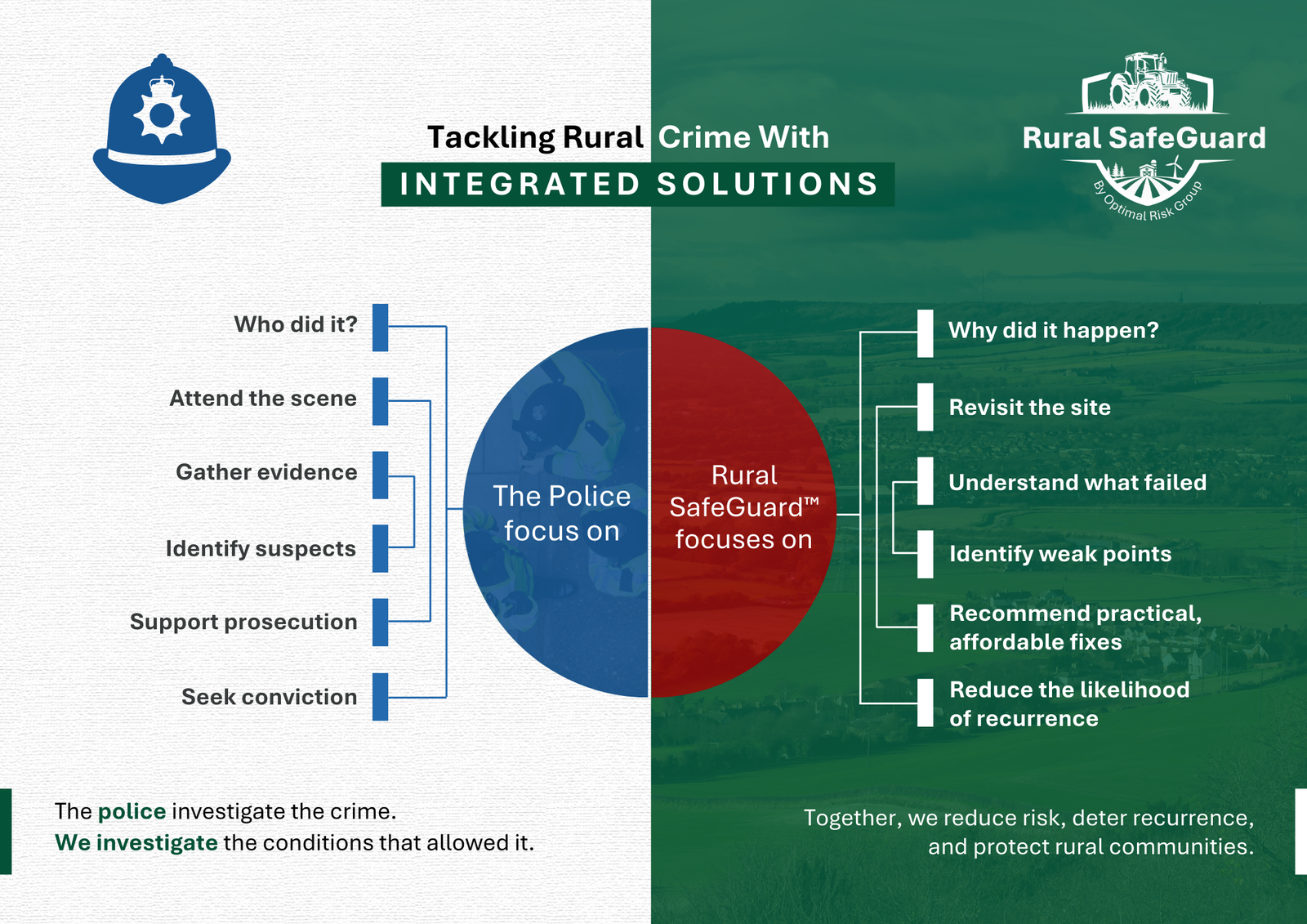
- Empower farmers: The process fosters a sense of ownership and control over farm security, enabling farmers to make informed decisions and reduce reliance on county police forces.
In summary, conducting a farm security self-assessment is a strategic approach to safeguarding agricultural assets, ensuring compliance, and fostering a behavioural-based security culture that encourages continuous improvement in farm management practices.